Web Application Description Language (WADL) is an XML-based format for describing the structure and functionality of RESTful web services. It provides a machine-readable document that outlines endpoints, HTTP methods, request/response formats, and parameters, enabling developers to standardize API documentation and automate client-side code generation.
What Is Web Application Description Language (WADL)?
WADL, or Web Application Description Language, is an XML-based code that outlines the functionalities of a web service. Its purpose is to establish a universal method for defining web services and their functions, much like how WSDL defines SOAP services. By using WADL, programmers can generate a computer-readable definition of a web service and its operations. This enables the creation of client applications that can effectively communicate with the web service. WADL is particularly useful for HTTP-based web applications, providing a machine-readable description that facilitates programmatic access to internal data.
The WADL specification, as defined by the W3C, is an open standard that can be utilized by any program that can consume XML documents. This allows developers to incorporate WADL into their development endeavors, regardless of the programming language or platform they’re working with.
Aside from defining a web service in a way that can be read by machines, WADL also has several other benefits compared to traditional methods like SOAP or RESTful services. For instance, the use of XML for encoding data allows for quicker development and more uniformity across various software projects. Additionally, as an open standard, developers aren’t restricted to using proprietary formats or APIs for their client applications, giving them more flexibility in finding the optimal solution for their project needs.
Benefits of using WADL
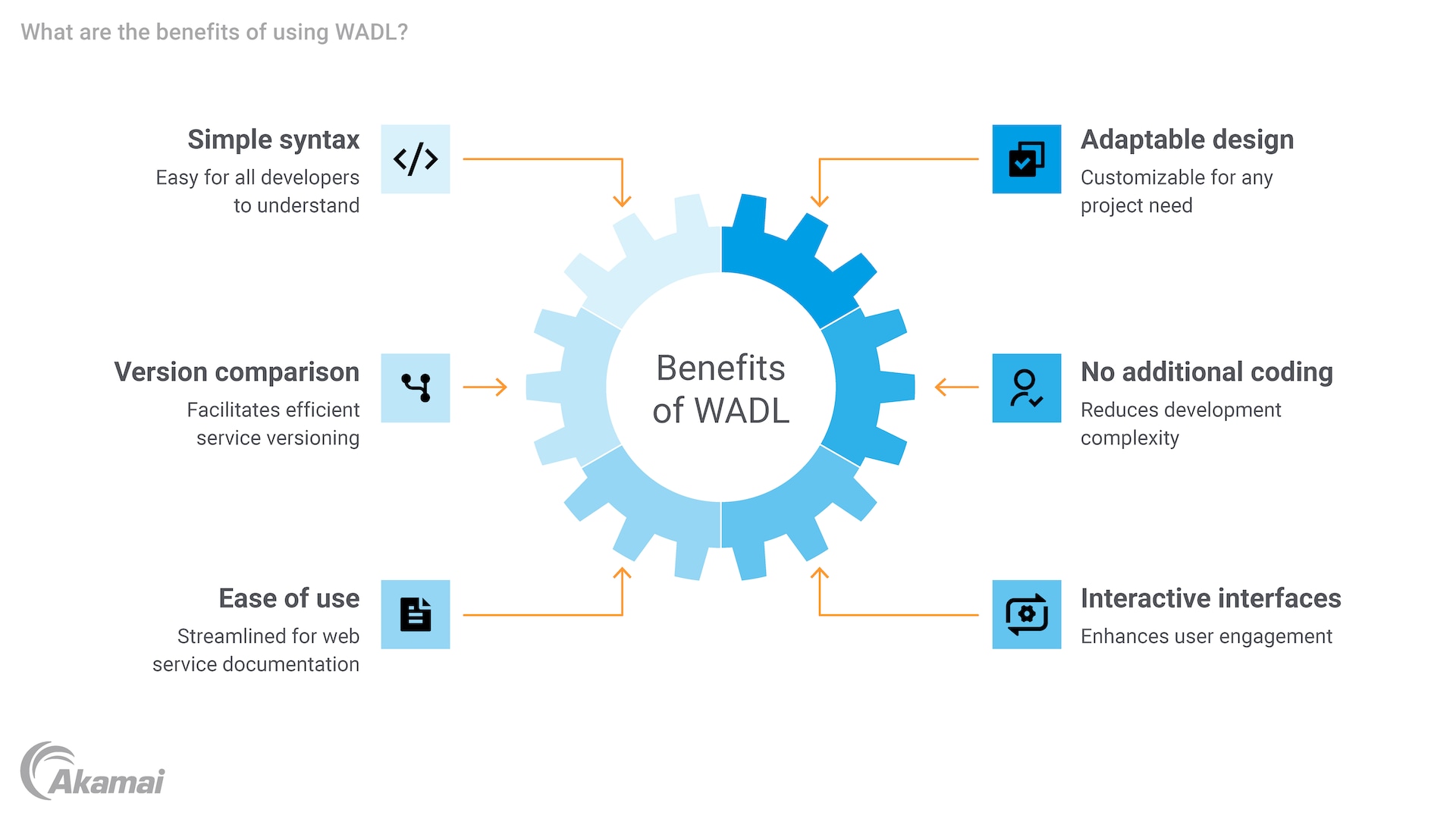
WADL is a highly valuable resource for web development, enabling developers to quickly build powerful and streamlined applications. Both beginners and seasoned professionals easily grasp its simple syntax. Additionally, its adaptable design allows for personalized adjustments to suit the requirements of any project.
In addition to facilitating developers in efficiently comparing various versions of web services, WADL offers a distinct method in comparison to other standards such as SOAP or RESTful services. This approach doesn’t entail any additional coding after creating the description, nor does it require complicated configurations before usage. As a result, developers concentrate on constructing efficient client applications that can effortlessly integrate with current systems.
WADL’s ease of use has made it a favorite among developers seeking a streamlined method for documenting web services in a format that can be easily interpreted by machines. With the use of this language, developers can swiftly create interactive interfaces and enhance the user experience for clients who interact with their web services on the World Wide Web. Furthermore, its adaptability allows for adjustments to be made at any stage of development to meet any unique demands that may arise during the creation of a web application. The cross-reference feature in WADL helps in linking definitions of parameters, methods, and representations within the document, minimizing duplication when the same element is utilized in multiple locations.
Creating a WADL document
Making a WADL document is a simple task. The initial step in creating a WADL document is to construct the XML structure and syntax. XML descriptions are a key component of WADL, facilitating the reuse of web services and serving as a bridge between different services. It’s crucial to verify that these elements are correct, as this will determine if clients can comprehend it. Child method elements play a critical role in defining HTTP methods associated with resources or applications, allowing multiple variations of the same method with different input or attributes.
After completing the XML structure and syntax, the document must be supplemented with elements for clients to recognize it. These elements encompass details about the web service’s operations, such as the parameters used in requests or responses, formats of requests and responses, and the HTTP methods employed for communication between client applications and the web service. Additionally, it’s important to include documentation for each operation featured in the application, as this will aid developers in comprehending the functionality of the web service.
After all the components have been incorporated into the WADL document, it must be checked against a relevant XSD file. This process verifies that the information in the document meets the predetermined criteria set by clients. If any errors are identified during validation, they must be fixed before proceeding with the development.
Developers can expect smooth and efficient interactions between their applications and web services within their system architecture by adhering to these guidelines for creating a WADL document. This method not only saves development time, but also promotes uniformity across various software projects.
The role of WADL grammars and resource elements in API design
WADL’s XML-based structure includes a robust system of grammars and resource elements that enable precise definitions for RESTful APIs. Grammars define the schemas for input and output data, ensuring strict validation of data structures.
Resource elements:
- Serve as the building blocks for API endpoint definitions
- Contain details about HTTP methods, child elements, and params, providing a clear hierarchy of interactions
Example workflow:
- Grammars: Establish input and output schemas for the web service.
- Resource elements: Specify endpoint structures, including method types and query parameters.
- Header definitions: Use WADL to document required and optional HTTP headers for endpoints.
In WADL, parameters and methods are defined using specific elements that outline their roles and interactions within the web service. The param element is used for parameter definition, which can either be a direct definition or a reference to a parameter defined elsewhere. This flexibility allows for clear and concise parameter management.
The method element is used for method definition, describing the input and output of an HTTP protocol method that may be applied to a resource. The request element within the method element specifies the input required when applying an HTTP method to a resource, while the response element details the output resulting from the HTTP method’s execution. These elements are essential in defining the interactions between the client and the server, ensuring that each request and response is clearly documented and understood.
This structured approach ensures clarity and precision, enabling development teams to create reliable and maintainable APIs while improving client-side and server-side interoperability. By adhering to WADL’s principles, developers can ensure a consistent experience across the entire API lifecycle.
WSDL vs. WADL
XML-based languages such as Web Services Description Language (WSDL) and WADL are utilized to outline the functionalities of web services. While WSDL is primarily employed for SOAP-based services, WADL is commonly used to describe the parameters of RESTful services. Unlike WSDL, which specifies the format of an SOAP API, WADL is suitable for outlining the structure of a RESTful API.
A key distinction between WSDL and WADL is their choice of language: WSDL primarily utilizes XML to define web services, and multiple schemas can be embedded within WADL descriptions to enhance clarity and functionality, while WADL opts for JSON. This can impact the way developers build their applications and handle security measures such as authentication and authorization. Moreover, although both standards provide similar capabilities for outlining web service operations, they vary in terms of syntax and data organization.
When faced with the decision between using WSDL or WADL for your application development, it’s important to thoroughly assess your project’s requirements before making a choice. Factors such as the preferred language (XML vs. JSON) and security features should be considered when determining which standard best suits your needs. Despite the decision, both standards are effective tools that can efficiently generate code for both client-side and server-side applications with minimal effort from the developer.
Implementations of WADL
Today, developers across various platforms are utilizing WADL in numerous ways. WADL has gained significant support from popular frameworks like Apache CXF, Apache Axis2, and Apache Wink. These frameworks offer a convenient feature for developers to automatically generate client-side code in languages like Java or JavaScript. Furthermore, while WADL has limited support in the .NET platform, it has comprehensive support for Oracle Application Server 10g and IBM WebSphere 7.
Utilizing WADL to produce code can be an effective approach for constructing web services that are dependable and protected. This eliminates the necessity for developers to manually write code from the beginning; instead, they can utilize the WADL file to swiftly and precisely generate client-side code. Additionally, it promotes uniformity among various software projects, as developers can access a document outlining the capabilities of the web service without needing to understand its underlying technologies or protocols.
Use cases for WADL in RESTful web services
WADL offers significant utility in scenarios where standardized, machine-readable documentation is essential for designing or consuming RESTful web services. Common use cases include:
- Client-side integration: Developers can easily consume APIs by leveraging the detailed header and param definitions in WADL, enabling faster integration with third-party web services by ensuring accurate processing and responses.
- API gateway configurations: WADL simplifies the configuration of endpoints in API gateways, ensuring seamless connectivity and consistent request/response handling.
- Dynamic testing: Using WADL’s detailed grammar, automated tools can dynamically generate test cases during the testing phase for APIs, ensuring robust application security.
Broadly speaking, WADL improves efficiency in development and testing processes, making it particularly beneficial for large-scale distributed systems with complex RESTful web services.
WADL best practices
To maximize the benefits of WADL, it’s important to follow best practices when creating WADL documents. One key practice is to use a consistent naming convention for resources, methods, and parameters. This consistency helps maintain clarity and organization within the document.
Another best practice is to use descriptive doc elements to document each component of the WADL document. These descriptions provide valuable context and information, making it easier for developers to understand the web service’s functionality. Additionally, using the correct HTTP methods and status codes ensures that the web application behaves as expected, providing a reliable and predictable user experience.
Using tools to generate and validate WADL documents can also be beneficial. These tools help ensure that documents are correct and up to date, reducing the likelihood of errors and inconsistencies. By following these best practices, developers can create high-quality WADL documents that promote reuse and simplify the development of web applications.
Frequently Asked Questions
WADL is specifically designed for RESTful web services, while Web Services Description Language (WSDL) is used for SOAP-based services. WADL focuses on describing HTTP methods and resources, whereas WSDL defines operations and messages in SOAP services. WADL often uses XML or JSON for data encoding, while WSDL relies primarily on XML.
A WADL document includes several essential components:
- Resource elements: Define the endpoints and their associated HTTP methods.
- Param elements: Serve as child components of resources or requests to specify query parameters, headers, or template variables.
- Grammars: Define data schemas for requests and responses.
- Application elements: Serve as the root element, encapsulating the entire web service description.
- Base attribute: Designates the base URI for child resource identifiers, allowing for structured organization of the resources within the application.
- Doc elements: Documents WADL components, with attributes and content structure that recommend using specific XHTML modules for child elements.
Yes, WADL supports automated code generation for client-side and server-side applications. Many development tools can parse WADL documents to generate boilerplate code in languages like Java, JavaScript, or Python, streamlining the integration process and reducing manual coding efforts.
WADL offers several benefits for API design:
- Standardized, machine-readable API documentation
- Simplified integration for clients and developers
- Support for reuse of templates, headers, and parameters across multiple endpoints
- Improved API testing and validation workflows by providing detailed resource definitions and grammars
Why customers choose Akamai
Akamai is the cybersecurity and cloud computing company that powers and protects business online. Our market-leading security solutions, superior threat intelligence, and global operations team provide defense in depth to safeguard enterprise data and applications everywhere. Akamai’s full-stack cloud computing solutions deliver performance and affordability on the world’s most distributed platform. Global enterprises trust Akamai to provide the industry-leading reliability, scale, and expertise they need to grow their business with confidence.