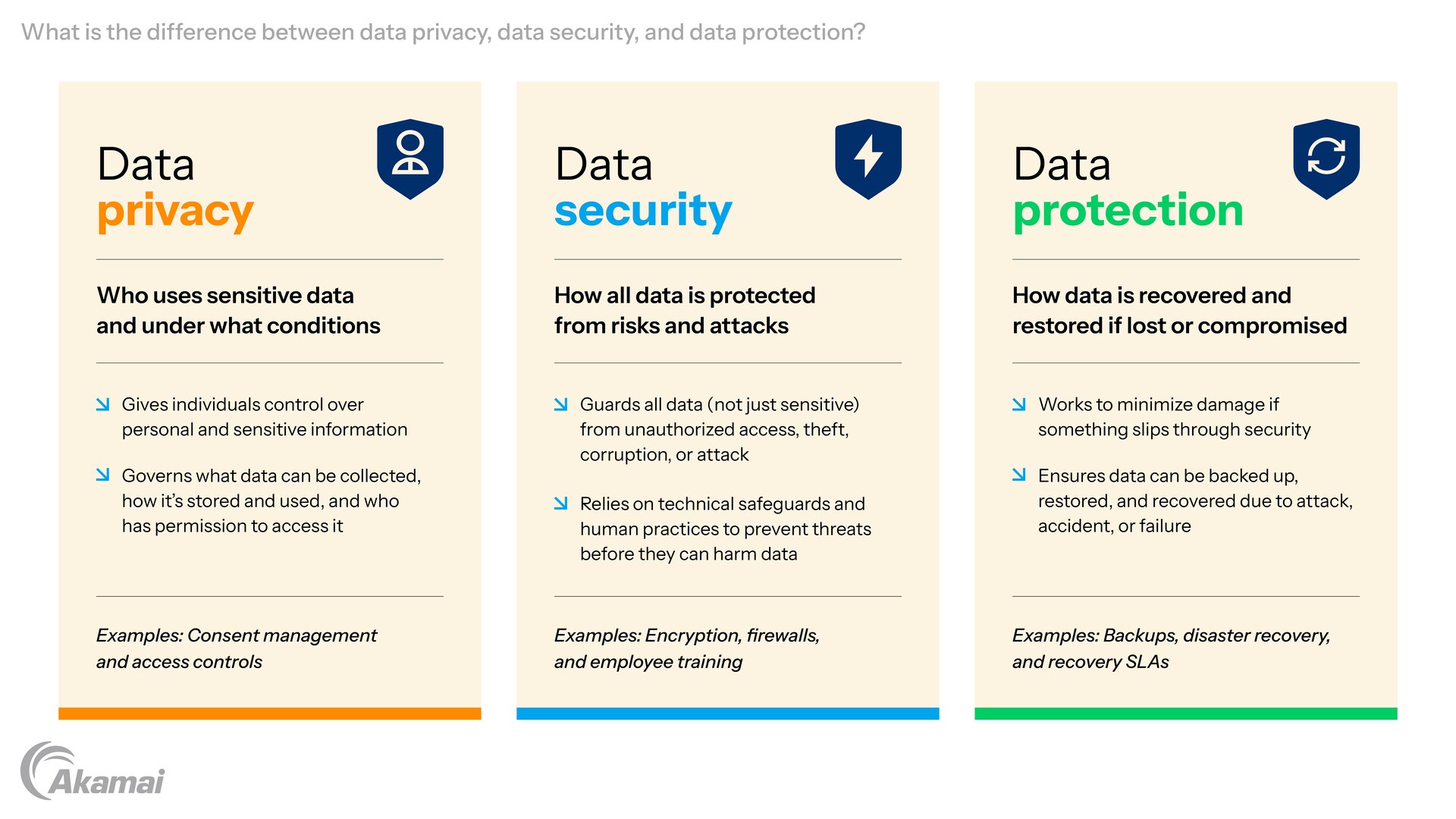
Data security involves both an up-front effort to establish baseline data security standards followed by an ongoing effort to maintain and evolve those standards in response to new data, emerging threats, or changes in the IT environment.
Securing data begins by identifying all the data a company has stored across the enterprise. Rarely, if ever, does this data live all in one location; it’s spread widely throughout databases, applications, and endpoints, and it includes physical data (documents, notes, etc.) along with digital data. Some data sources are obvious. Others, however, are easy to overlook or ignore, leaving certain data unsecured and more vulnerable as a result. Applying minimum data security standards to everything depends on finding all of it first.
Next comes the ranking of risks. Though all data needs security, some data requires extra precautions. Sensitive data like financial records, personally identifiable information (PII), and intellectual property must be closely guarded since it’s the prime target of attacks and the most expensive when involved in a data security breach. Those in charge of data security need to identify which assets are most at risk, whether because they’re highly vulnerable or highly sensitive. Then they need to thoroughly catalog those assets and, as necessary, surround them with additional data security.
Once a clear map of the data architecture has been established, data security becomes about putting various data security solutions in place. The specific solutions will vary by organization, but in most cases will include cybersecurity tools for detecting, blocking, and remediating the full spectrum of cyberattacks. Also important will be tools for verifying and validating anyone attempting to access data while managing access privileges over time. Cybersecurity standards like antivirus and user behavior analytics can help guard against a data security breach, but in other cases, dedicated data security software will be necessary to ward off attacks.
Developing a data security policy matters just as much as installing the right data security solutions. Policies dictate how users at all levels interact with data, from how they pick their passwords to what they keep in their email inbox. Policies also prescribe how current and future technologies will handle enterprise data, from where and how it gets stored to what cybersecurity measures get applied.
Data security management is the final component. Data security starts but doesn’t stop, which is to say it takes constant review and revision. As companies store more data in more places inside elastic IT environments, the tools, policies, and methods of data security must change to be able to stay effective.